Why indie authors choose to run Kickstarter campaigns (and why readers should back them)
This article was originally posted as a reply to on Twitter on 13 September 2024. As of 2025, I permanently moved over to Bluesky and effective from 17 January 2026, I have deleted all of my Twitter posts due to the changed terms of service.
Some of my most popular threads, such as this one, I have preserved on my website (with minor edits, for accessibility and ease of reading) for posterity.
In September 2024, fellow author Maya Darjani had a question:
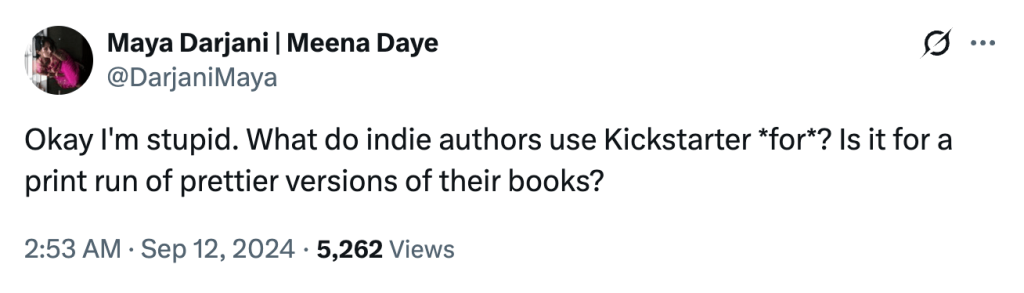
At that time, I was getting ready to launch Supplicant on Kickstarter so I chimed in with some thoughts.
Looking back at this post in January 2026, having successfully wrapped the campaign and fulfilment, I can say with 100% certainty that launching on Kickstarter was absolutely the right choice for me and my readers.
—Delilah.
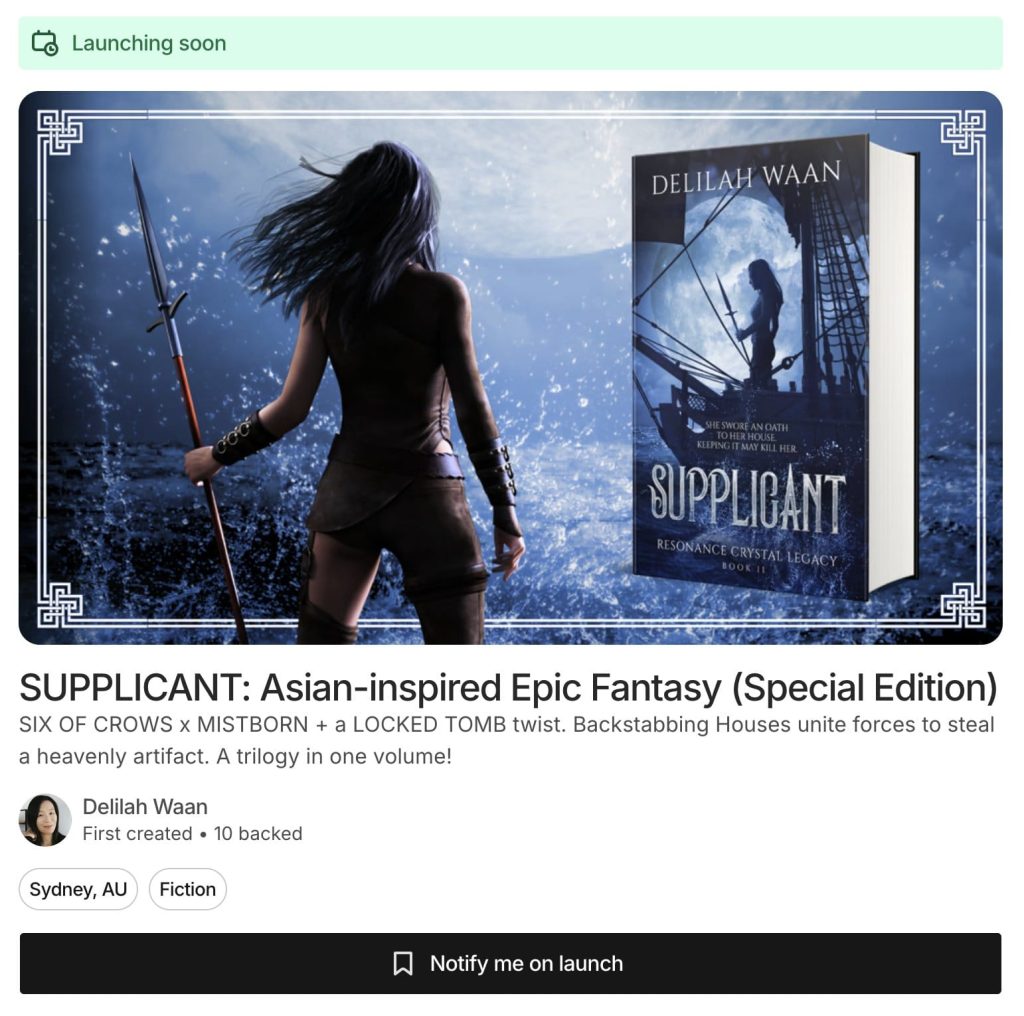
There are probably as many reasons and as many ways to run a Kickstarter as there are indie authors, but since I currently have a campaign in pre-launch for Supplicant, I thought I’d share the reasons behind what I’m doing and why.
Find new readers
If no one knows about your book, no one can consider reading your book!
Therefore, you must get the word out. Standard operating procedure (whether trad or self-pub) is to use comps a.k.a. “this book is X meets Y but Z”
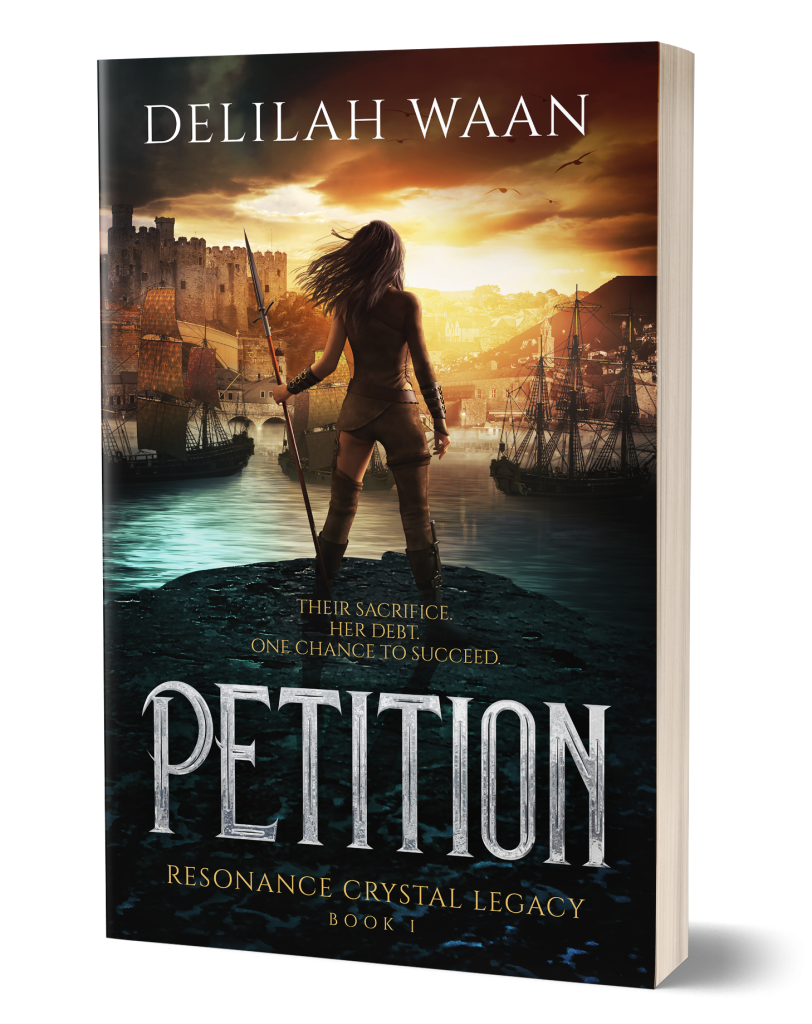
Jade City x The Hunger Games
To save her family, Rahelu must beat her wealthy, privileged rivals in a ruthless job hunt tournament.
An immigrant fantasy about love, debt, ambition, and sacrifice.
As a new author, I genuinely believed this funnel diagram (pictured below) to be an accurate representation of how to get people to read my book.
It is…and it isn’t.
Look at the top of this funnel. Can you tell me what’s missing?
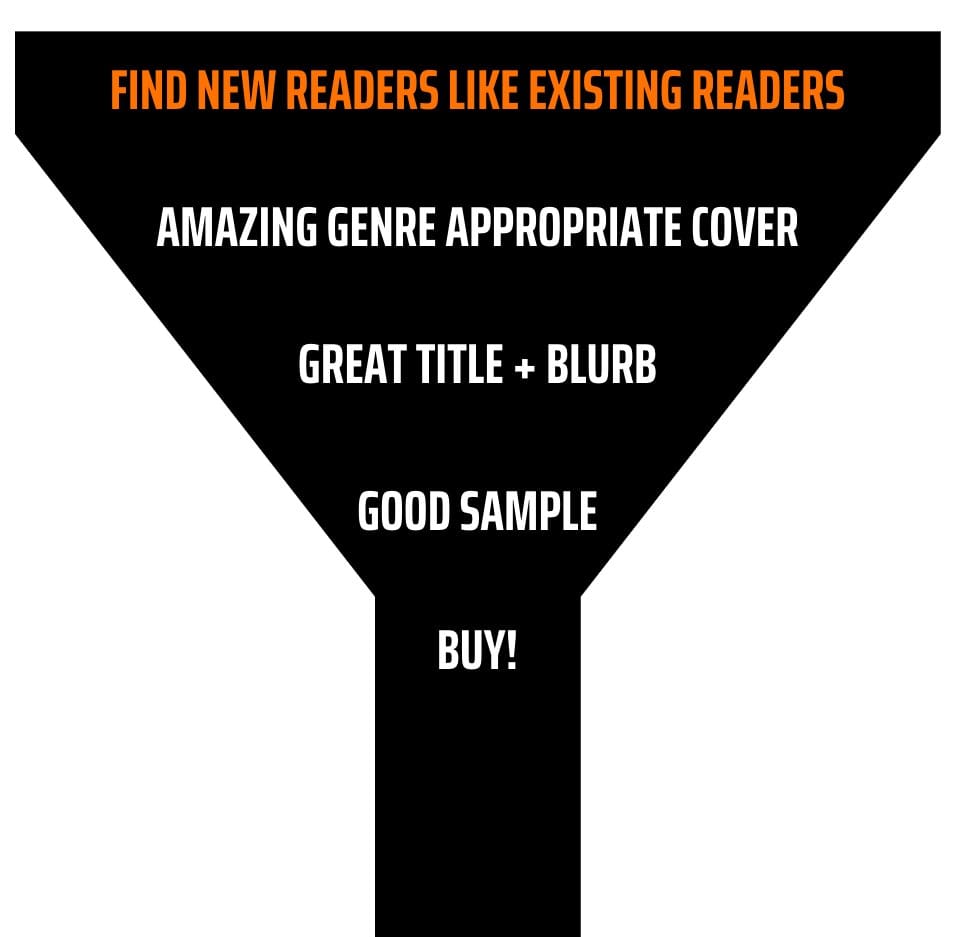
It’s traffic. No traffic? No readers.
The discoverability problem
More books are being published than ever before, but discoverability is also worse than ever before. You can’t run out of online shelf space, but you can get buried so far down the search results that no one will find you.
Hence, traffic.
Where traffic comes from (and what it costs)
Content marketing (e.g. social media, blog posts) is “free”. Get good enough at it to create consistent, possibly viral content, and you can generate a lot of traffic.
It looks easy, but is very hard to master, and it also eats up writing time.
Cross-promo, where many authors band together to promote an event, is another option. The Narratess sale is a good example where the buzz of having 350+ books generated far more traffic for every participating author than they could individually.
You can also pay for traffic. Common options & ballpark USD costs:
- advertising ($5+/day to Facebook, Amazon, etc) – Yuval Kordov has done some great threads on running ads.
- promo newsletters ($10-$1000) – Dave Dobson has done a great write up on the BookBub featured deal promo
- book tours ($70–$300+)
- ARCs/promo boxes ($0–$100+) – note that even digital ARCs can have costs of delivery
- giveaways ($0–$500)
Unfortunately, many of these traffic sources come back to one thing:
Most people will only see what the platform’s algorithms decide to show them.
On many platforms, discoverability (via the algorithm) has become a pay to play game.
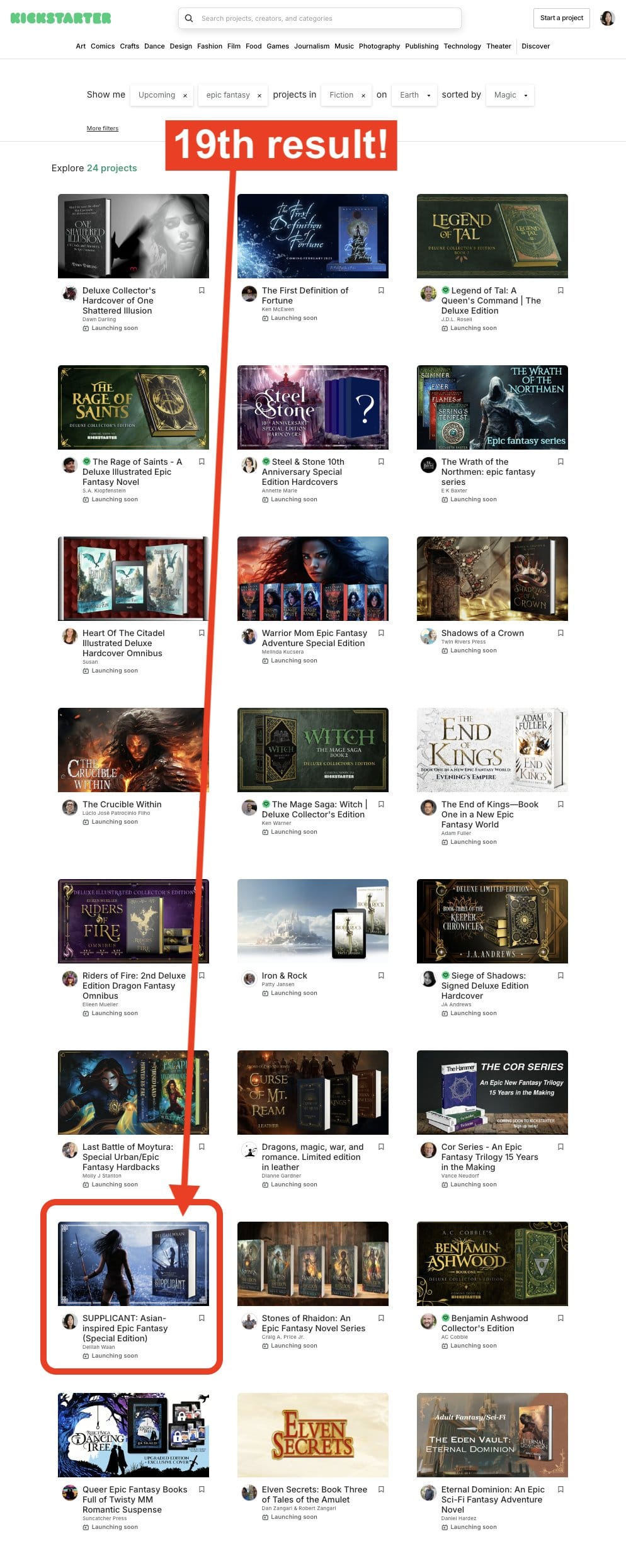
Kickstarter has the BEST algorithm for discoverability. You can find my campaign under:
Discover > AANHPI Creators
Discover > Women Creators
Publishing > Fiction > Upcoming projects > “epic fantasy”
Sorted by “Magic” = random. Every project has a chance to be on page 1.
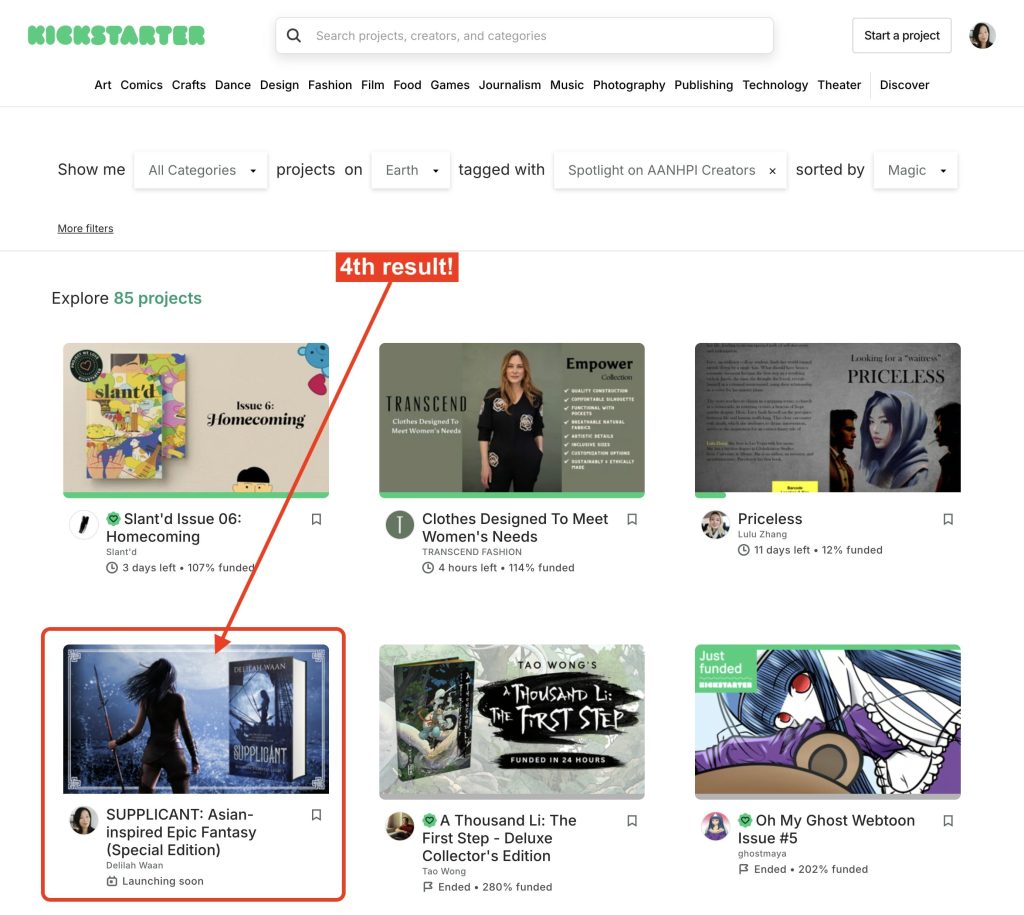
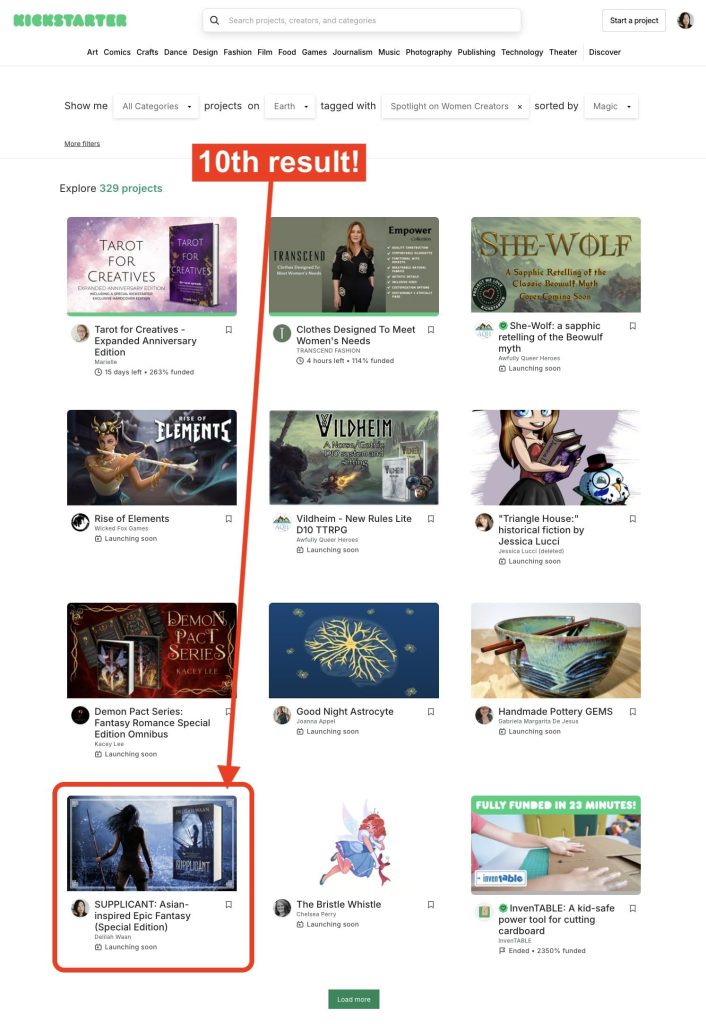
Kickstarter also prioritizes current & upcoming campaigns.
It’s easier to be discovered if I’m 1 of 24 upcoming epic fantasy publishing projects versus 1 of 24000 (or even 240) new epic fantasy releases on the Kindle store…because if you’re not in the top 100, you’re invisible.
Discoverability alone is a powerful reason to try out Kickstarter, but it’s not the most compelling reason for me. This is:
Make a liveable wage from my work, with less financial risk
Here are some numbers for you, from a former Chartered accountant.
Books are a volume business. You have to sell a lot of them to make a living from them. Trad pub works by taking a portfolio approach a.k.a. throwing a lot of things at the wall & seeing what sticks. The hits pay the bills.
It’s gambling.
That model doesn’t work for (early stage) self-published authors because you only have your books.
The most important thing self-published authors need to understand is their breakeven point. Given X amount of investment in your book, how many copies do you need to sell to break even?
“How much should I invest in my book?” is an individual question—it varies based on what you can afford, your skills, your network & your risk appetite.
The more formats & distribution channels you add, the more complicated things get.
Let’s start with ebooks.
How much does it cost to publish an ebook?
The ebook is your minimum viable product. You can get fancy, but for a basic ebook that
- will appeal to your target readers
- can be downloaded from an ebook retailer & read on most devices
all you need is an ISBN & a cover. ~$500 USD tops.
Here’s my cash outlay for the ebook of PETITION:
$395 USD Damonza cover
$180 AUD beta reader rewards & proof copies*
$88 AUD ISBNs (x10)
= ~$575 USD
*Since I did paperback & hardcover, I offered my beta readers print copies of the published book, if they wanted them
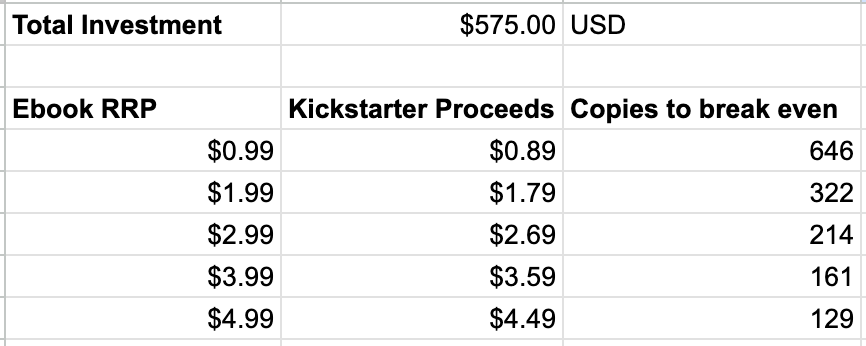
Breakeven point (BEP) = Total Investment / Profit per Unit
Most self-publishing platforms pay authors on a net basis.
When you buy a book on Amazon for $2.99, Amazon takes your money, takes out their cut (30% + download fees), & pays the balance to the author.
Pricing & royalty structure is…a whole thing I’ve discussed previously.
BEP changes based on different price points. Using a very simple model of Amazon USD sales only:
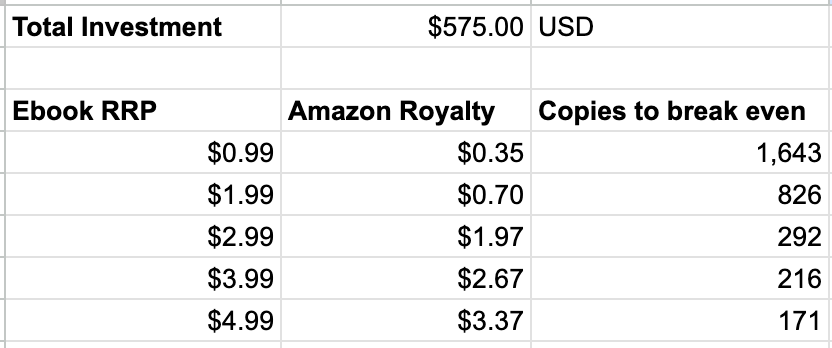
At $0.99, I need to sell 1,643 copies.
At $4.99, I need to sell 171 copies.
Every cent I earn after my BEP goes to my cost of living (CoL). Sydney, Australia is high CoL so $575 USD/wk is actually not liveable for me. But it’s enough elsewhere, so let’s say this is how much I need to sell per week via Amazon to live.
1643 new readers is a LOT of new readers to find. Even 171 new readers is a lot. For context, it’s taken me over 2 years to crack 500 paid copies sold, with the vast majority during $0.99 sales and mainly relying on driving traffic via social media.
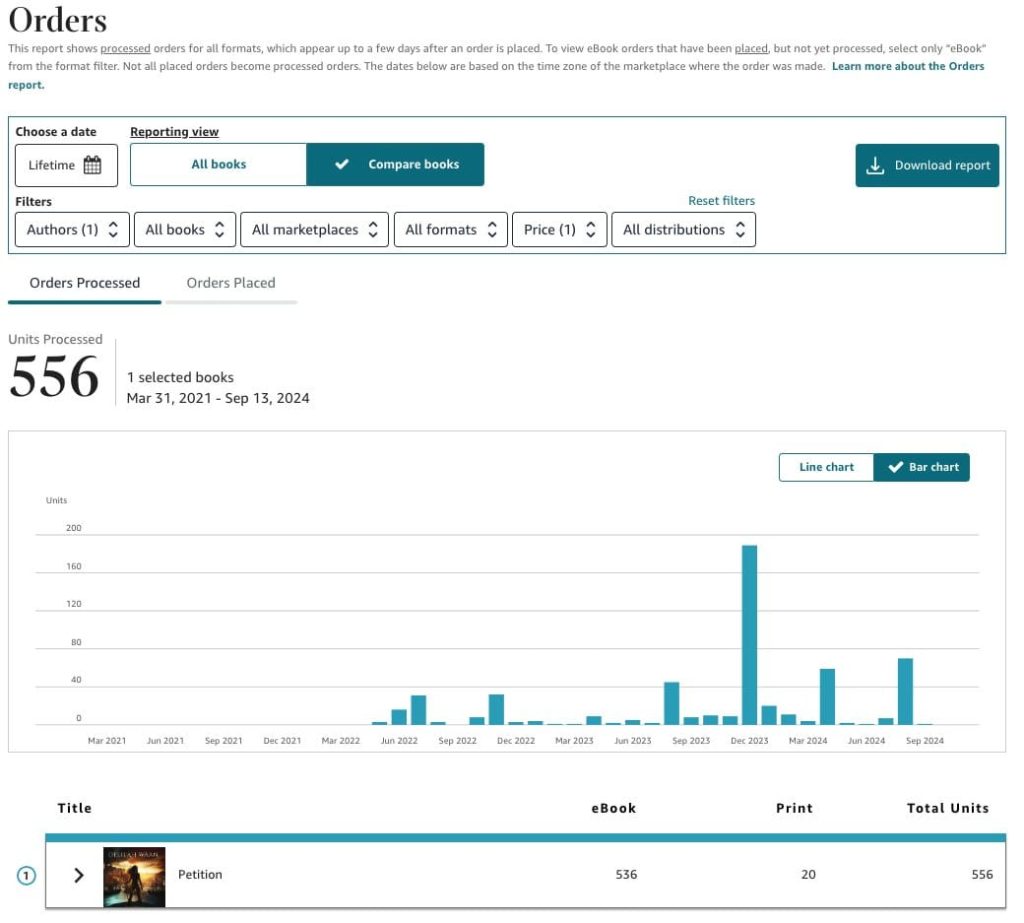
Since not every reader who sees your book will end up buying the book, in order to find 171 new readers, I need to get my book in front of WAY more people.
But then I end back up at the discoverability problem, and it becomes a bit of a vicious cycle.
The real winners in a system with broken discoverability
Under this broken system, the only winners are corporations like Facebook and Amazon, and book marketing/promo services. What authors earn in royalties gets immediately funnelled back into ads and promos…and the cost of those go up because of demand!
It doesn’t have to be like this.
The BEP is so much lower if readers buy from me directly, especially at lower price points, because I get to keep 97% of the sale price AND I get paid the next day.
At $0.99, I only need to sell 593 copies
At $4.99, I only need to sell 119 copies
Direct makes it easier for me to earn a liveable wage with a smaller audience. That’s important!
Barriers to buying direct from authors
Unfortunately, even though indie readers love to support indie authors, many readers are not in the habit of buying direct.
Amazon has a very powerful lock on readers’ purchasing behaviour because the experience is seamless, as they own the whole vertical from shop to e-reader.
To convince someone to buy direct, I have to:
- get them to go to my website, not Amazon’s
- have them be ok with going an extra step to load the ebook to their e-reader
I lose 99% of people at step 1, because they’re used to going to their retailer.
BUT with Kickstarter…
What makes Kickstarter different to (and better than) Amazon
Kickstarter as a platform began as a way to help creators bypass gatekeepers and logistical and financial barriers by connecting them directly with their audience. They actively put the direct connection between creators and backers at the heart of their business model.
Amazon does everything possible to keep authors from connecting with their readers. Even if you follow me on Amazon, there’s no guarantee you’ll actually get an alert when my next book comes out. And they definitely won’t tell me how you found my book. It’s a black box.
Kickstarter is the complete opposite to Amazon. They’ve built a culture where creators are encouraged to connect with backers as much as possible & backers are in the habit of supporting creators directly.
Successful Kickstarters often develop thriving communities of their own.
How Kickstarter becomes a game changer for authors
Assuming you can write a book, getting it published as an ebook is pretty easy.
With print on demand, even paperbacks & hardcovers are easy, assuming you can invest a little more upfront for a full wrap cover & dust jacket (optional, there’s budget ways around it)
But print on demand (POD) is very expensive. It is easily 2x (or more) of what it would cost for an offset print run.
Authors end up pricing as low as possible, so our readers don’t have to pay through the nose, but we make next to nothing on POD print copies.
![Screenshot of tweet by Kajornwan Chueng (@Siennafrost) which reads:
I do not like selling paperbacks AT ALL. For me to earn $3, my readers have to pay $17.99.
Yeah, I'm keeping my day job.
[Screenshot of KDP dashboard showing pricing and royalties]](https://www.delilahwaan.com/wp-content/uploads/2026/01/whyks_pod_pb_margin-818x1024.png)
POD books also just aren’t as nicely made as offset printed books.
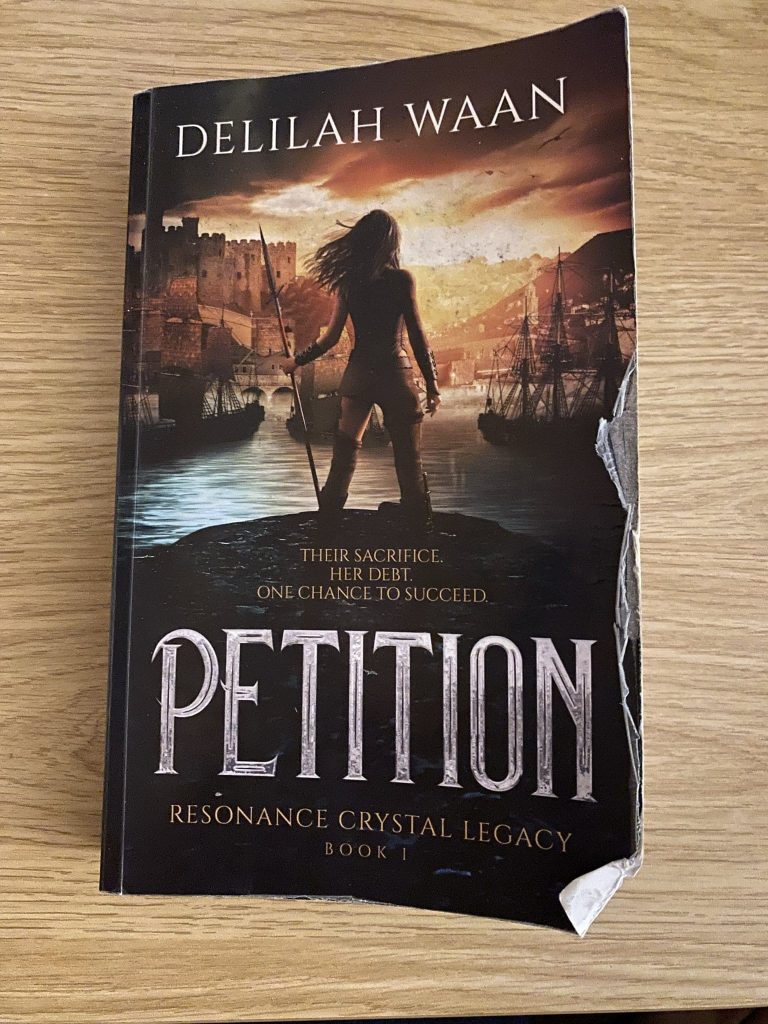
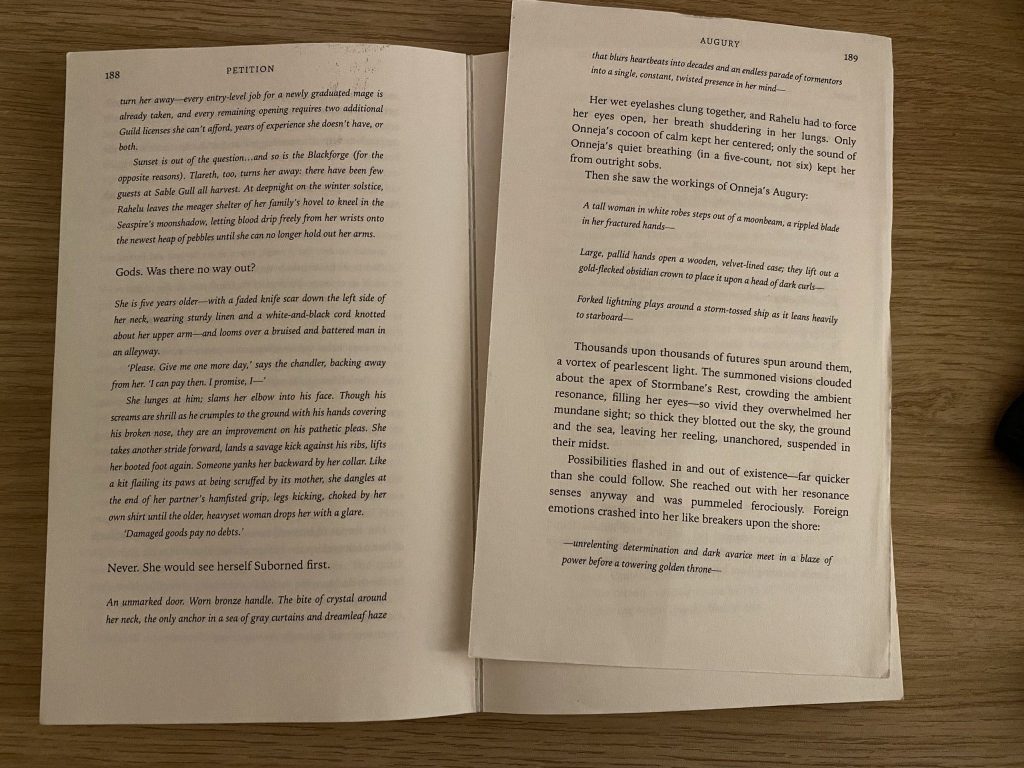
This is my Amazon KDP POD copy of Petition. It’s my reference copy so it lives on my desk and I do flip through it a bit. But it’s only 2 years old and the cover’s peeling and pages have come loose.
While some places like BookVault now offer features like foiling, ribbons, custom endpapers, digital edges, et cetera, stuff like smyth-sewn binding, faux leather/cloth covers, complicated foiling still require an offset print run.
Those have minimum order quantities.
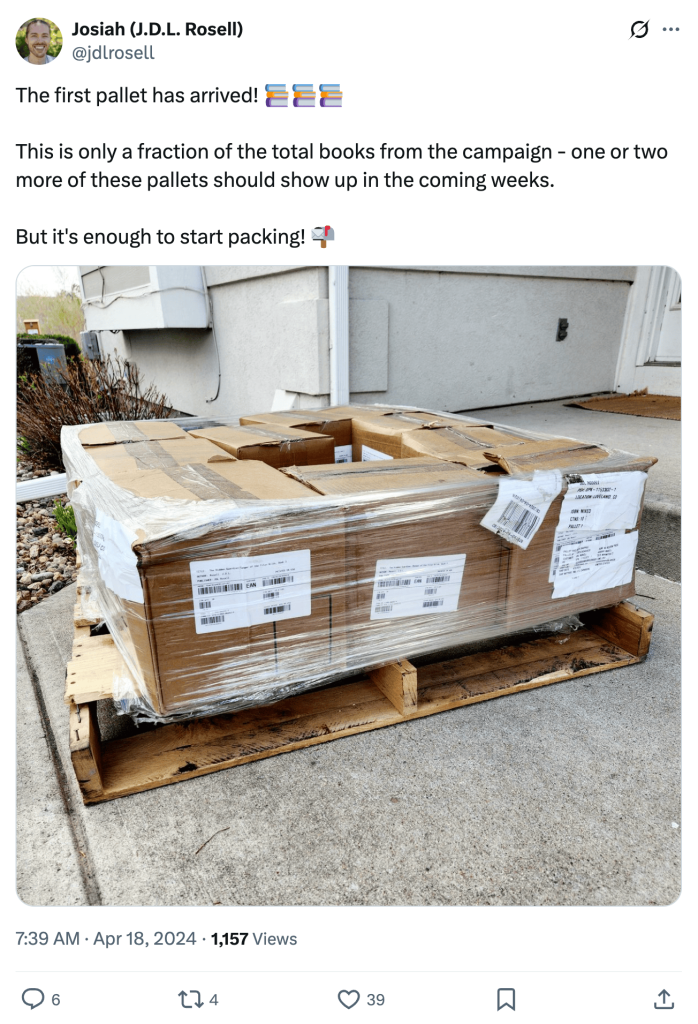
There are offset printers who will do runs as small as ~50-100 books. But the machines they use cost a lot to set up, so it doesn’t really become economical unless you’re doing 200, 300, 500 books.
This is ~100 copies of a ~700 page fantasy novel:
This is about ~250 copies:
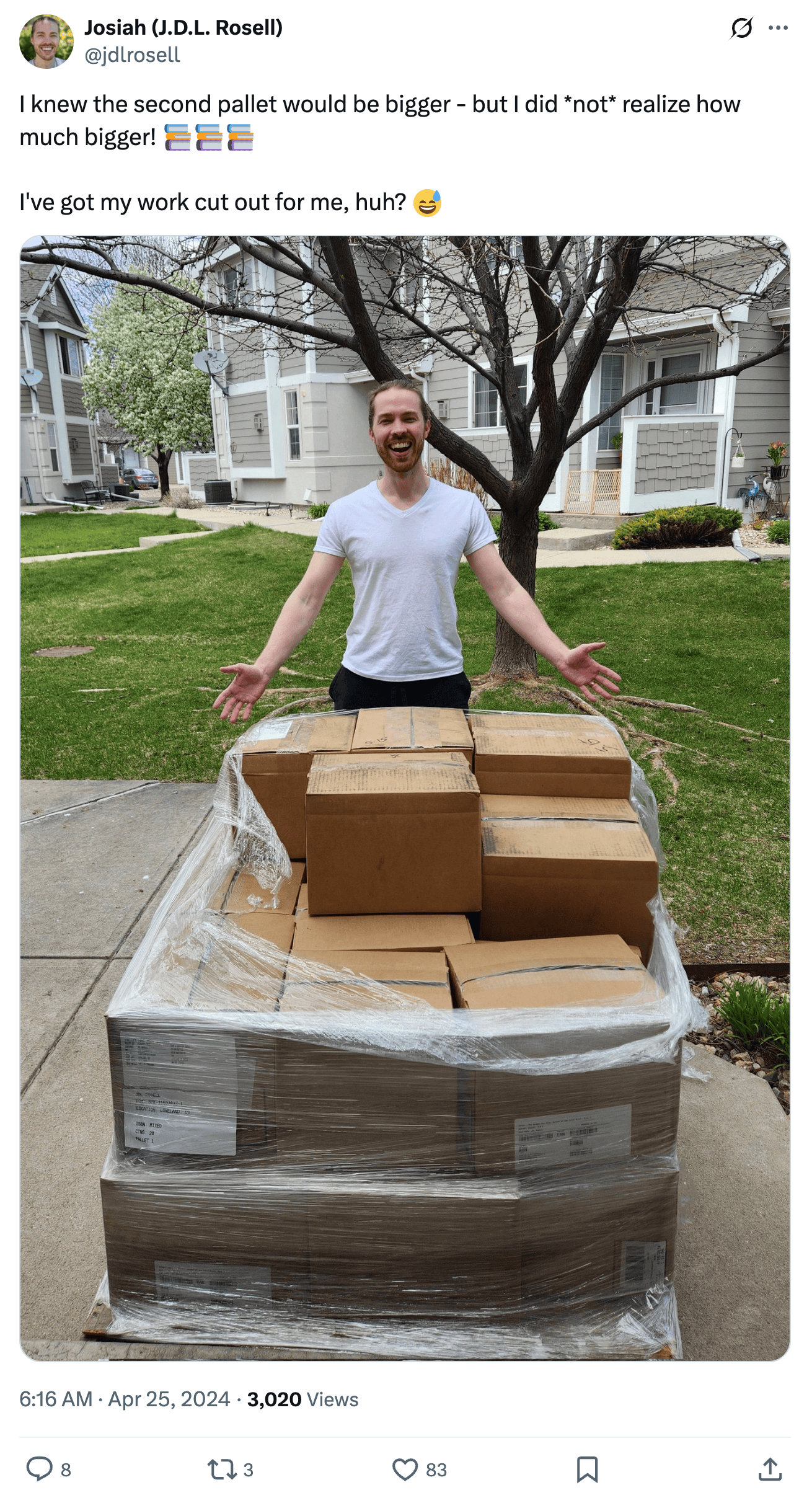
It’s a lot of books. Forget coming up with several thousand dollars cash to invest in inventory; just finding a place to store all of these is a challenge.
Kickstarter helps indie authors de-risk book launches
Every author’s circumstances are different so their risk appetite is different.
For me, personally, I can’t justify investing in a print run for 200 books when I know it took me 2 years to sell 500—most of which are ebooks at $0.99.
By running a Kickstarter campaign, I can gauge how much interest there is in a given format before I put any money down.
Are there only 10 people who want hardcovers? No problem, I’ll stick to print on demand.
Are there 100? Great! I can go to an offset printer.
By the way, Kickstarter’s cut is only 10% and half that goes to payment processing.
Retailers like Amazon take 30% or more.
Kickstarter backers pay the same (sometimes less) than they would at retail. But more of the money makes its way into my pocket.
Since Kickstarter has better discoverability, I don’t have to pour all of my earnings back into ads/promos just to make sure people are seeing my campaign so I have a chance at finding new readers.
You know what I can do with that money instead?
The impossible becomes possible
I can commission art from brilliant, talented human artists like Rosemary Fung.
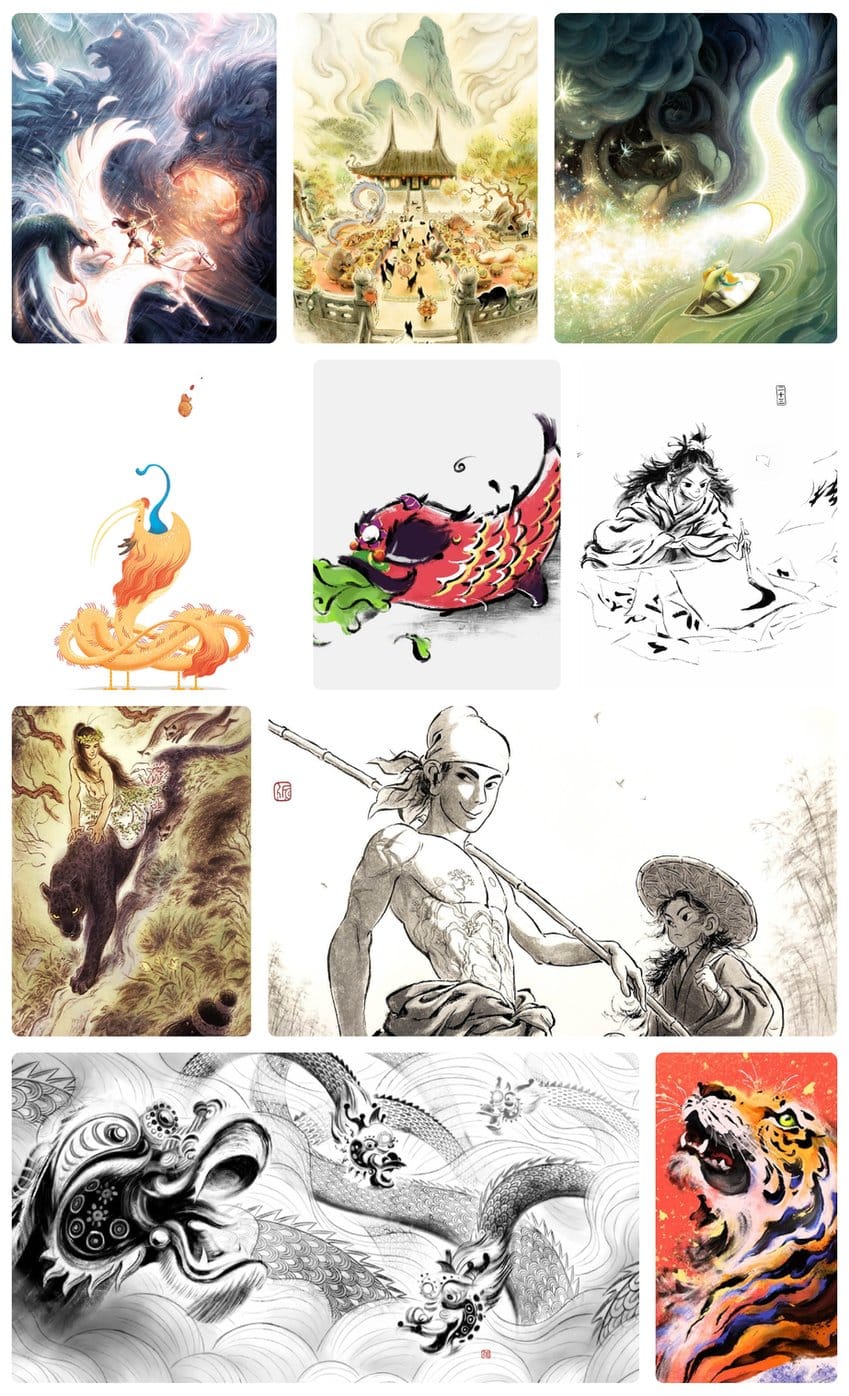
Rosemary is painting character portraits and STUNNING special edition art for my books that I cannot wait to share with you.
I don’t visualize when I write. I don’t do mood boards or fan cast actors. There’s very few descriptions of what my characters look like in my books.
It’s hard to describe how I felt when I saw Rosemary’s concepts for Rahelu & Nheras.

Like up until then, Rahelu & Nheras were just collections of words in my mind, right? Maybe the words had made it out in a specific order onto somebody’s screen or a page somewhere but still—they were just words from my brain.
Now they’re real.
As a self-pubbed author, I have a limited budget. But with the way Kickstarter works, how it encourages the forming of communities and for backers and creators to go on a journey to make amazing and cool things, the sky is really the limit.
Why you should support authors by backing on Kickstarter, instead of waiting for retail release
I’ve seen people wondering whether there is any point to backing a Kickstarter if it’s just the same as the retail edition, and they don’t care about early access.
Answer: Yes.
It makes a significant difference to the author. These numbers add up.
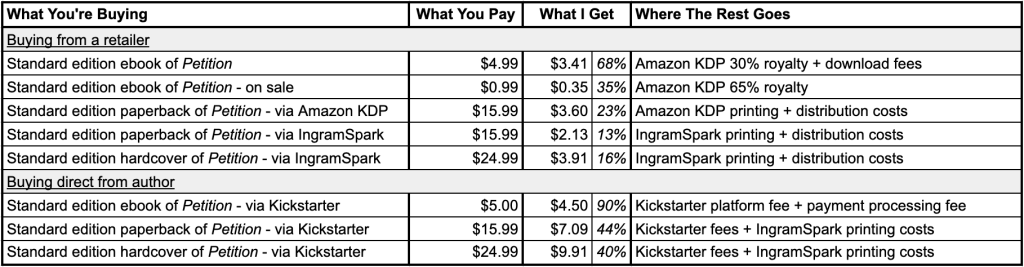
By backing a Kickstarter, you’re joining a movement that encourages supporting authors and creators directly, rather than concentrating economic power in systems that primarily benefit giant corporations like Amazon.
Kickstarter has been around for 15 years now. While there’s been some high profile duds, there have been many Kickstarter success stories.
Fantasy authors, in particular, benefit given the trail-blazing, record-breaking Brandon Sanderson example:
People have a level of trust in the Kickstarter brand & platform. KS projects, too, benefit from being time-limited events.
It’s easier for an author to convince readers to back a one-off Kickstarter campaign than to buy direct from their store.
Kickstarter is a virtuous ecosystem. By encouraging creators & backers to connect & form communities, everyone benefits & grows with the platform.
Amazon’s system, however, enriches the platform at the expense of customers & authors.
Ways to support an indie author’s Kickstarter
I’ve talked a lot from the author side, so I want flip to the reader perspective for a minute and acknowledge something important:
Not everyone is in a position to back a Kickstarter.
Also Boe Kelley made some excellent points in replies here:
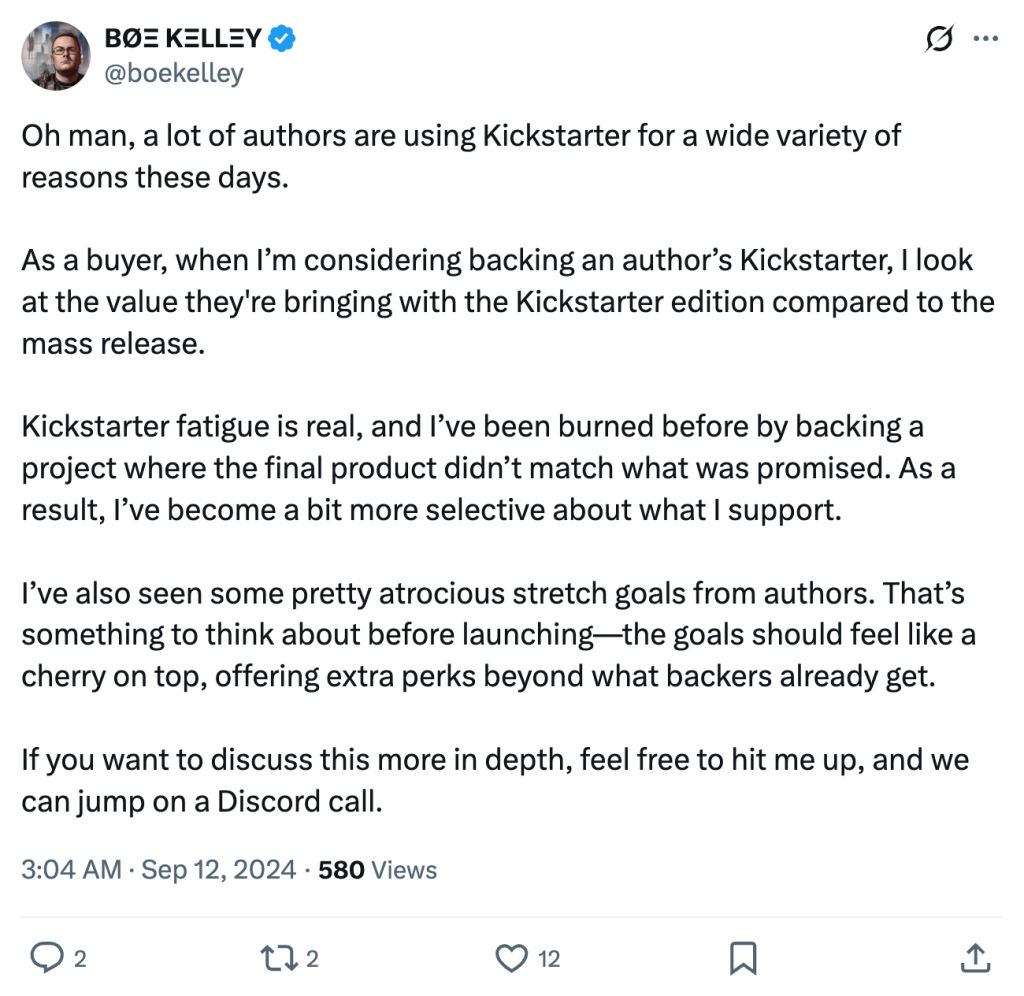
Please don’t come away from this thread with the impression that Kickstarter is the “only” or “right” or “best” way to support indie authors; it’s one of many ways.
Any form of support—even small actions to like and/or retweet—is wonderful. It all adds up.
Conclusion
I hope this has answered some of the questions about why an indie author might choose to do a Kickstarter.
And if you think SIX OF CROWS x MISTBORN with a LOCKED TOMB twist sounds fun, follow my Kickstarter page here:
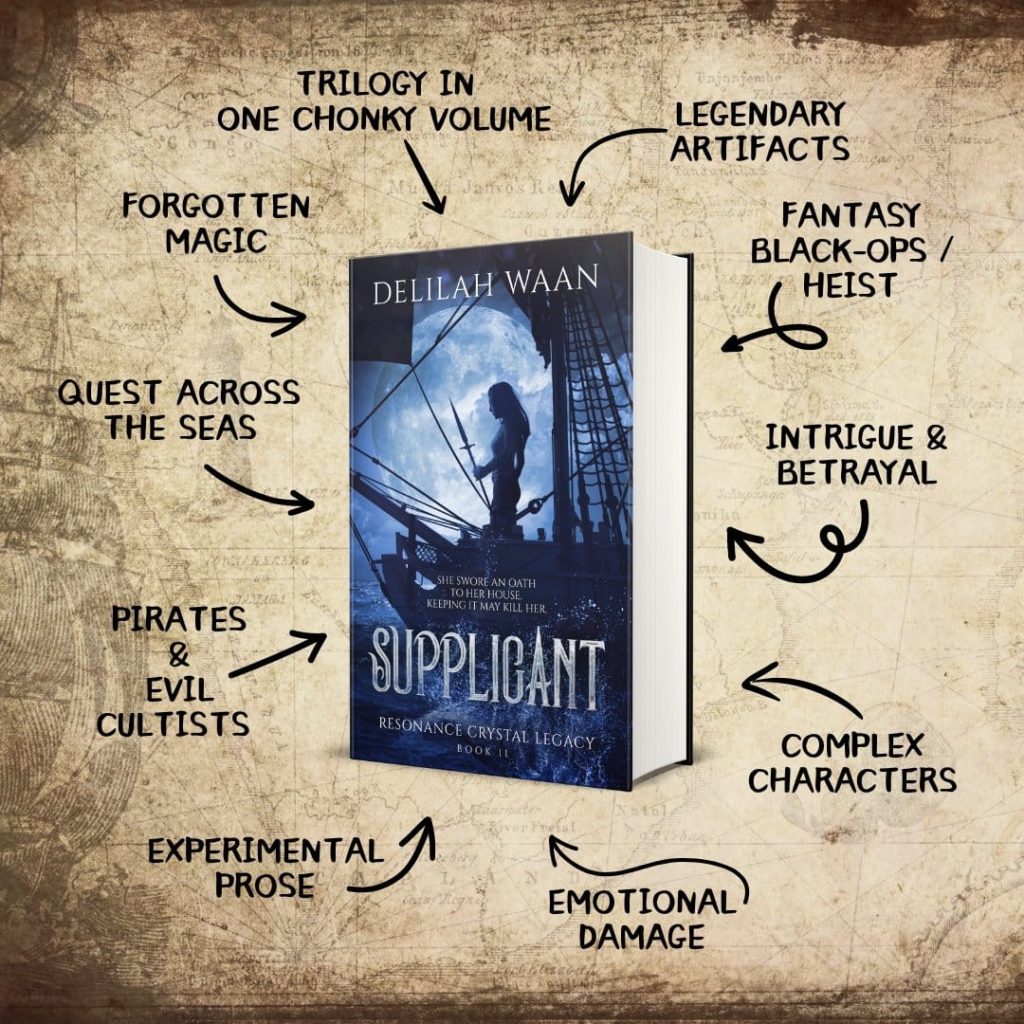
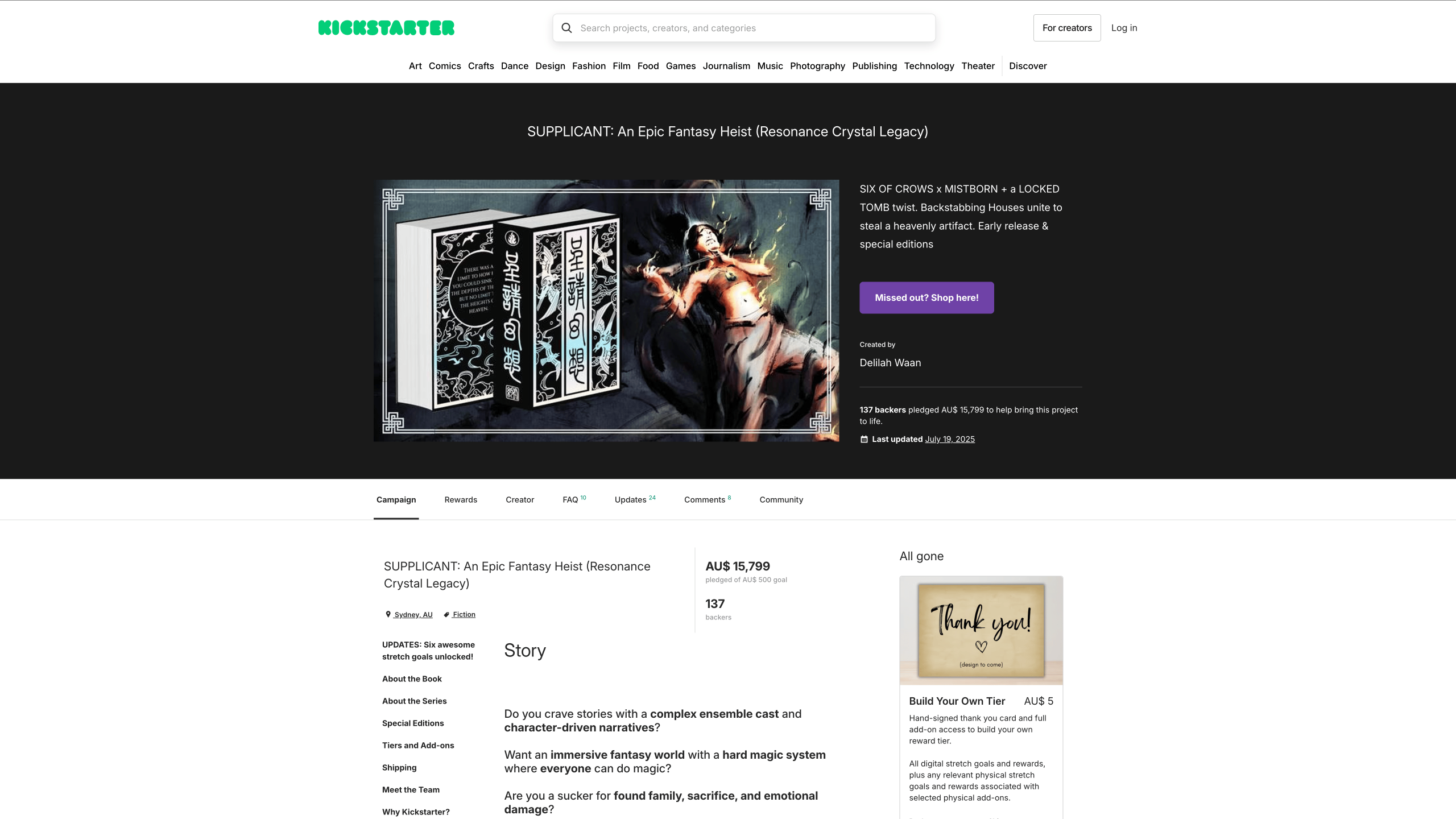
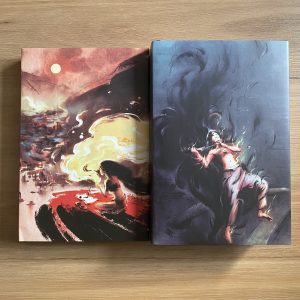
POSTSCRIPT (17 January 2026): Supplicant launched on Kickstarter in October 2024.
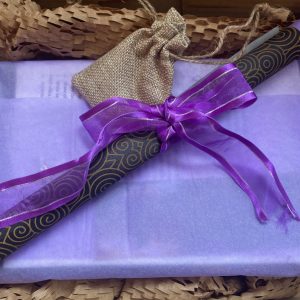
It funded in 9 minutes, ended up raising over $15,000 AUD, and paying for a print run of some truly glorious leather-bound collector’s special editions with all the bells and whistles:
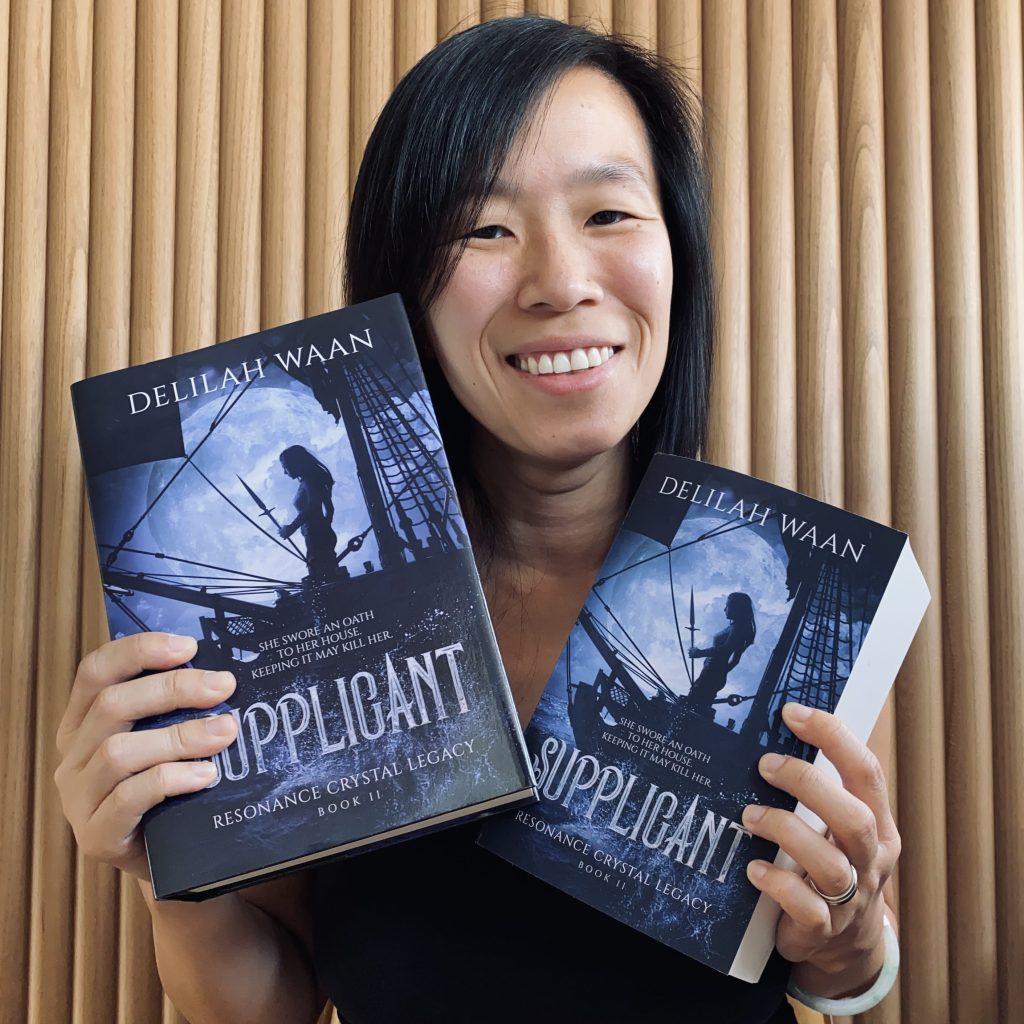
Delilah Waan had an absolute blast launching Supplicant, the sequel to her award-winning debut fantasy novel, on Kickstarter.
She needs to write faster so she can launch her next Kickstarter for the third book in the series, Dedicate.
Follow @delilahwaan.bsky.social for more of her thoughts on books and publishing.